What does postpartum anxiety actually feel like in your body?
Roughly one in five new mothers experiences postpartum anxiety, and a surprising number of them never once use the word worry to describe what they are feeling. Instead they describe a heart that will not slow down, a stomach that stays in knots, nights spent wide awake even when the baby is finally asleep, or a tightness in the chest that will not let go. If you have been searching for postpartum anxiety symptoms and quietly wondering why none of the worry focused checklists quite match what you feel, this is why. Anxiety after birth does not always live in your thoughts first. Often it shows up in your body long before your mind catches up to what is actually happening.
This guide walks through what postpartum anxiety actually feels like physically, why your body reacts this way, how long it tends to last, and what genuinely helps when your nervous system will not power down.
In case you are new here, I am Karla Hernandez, LCSW, founder of Alma de Madre and a postpartum anxiety therapy provider for new mothers, especially Latina and BIPOC mothers, working through the parts of postpartum that rarely make it into the baby books. I hear a version of this confusion constantly in session: a mother certain something is physically wrong with her, running through symptoms with her OB or her primary doctor, before anyone mentions that anxiety can feel exactly like this.
What does postpartum anxiety actually feel like in your body?
Most descriptions of postpartum anxiety start with worry, but worry is often the last thing a mother notices. What she notices first is her heart racing for no clear reason, a knot in her stomach that will not loosen, or a tightness across her chest that makes her wonder if something is wrong with her heart. She might feel like she cannot take a full breath, or notice her jaw and shoulders are clenched without realizing when that started. Sleep becomes difficult even in the rare windows when the baby is actually asleep, not because she is not tired, but because her body will not let her settle.
This is postpartum anxiety showing up as a full body experience rather than a thought pattern. The mind eventually catches up with the worry, the intrusive what ifs, the mental checklist that will not stop running, but the body often gets there first. A mother can be standing in her kitchen making a bottle, nothing alarming happening around her, and still feel like she is bracing for something to go wrong.
The physical signs everyone misses:
Beyond the racing heart and the knotted stomach, there are subtler physical signs that get missed because they look like ordinary new parent exhaustion. A clenched jaw that aches by the end of the day. Digestive upset that comes and goes with no clear food trigger. A restlessness in the legs or hands, an inability to simply sit still on the couch even when there is finally a moment to rest. Dizziness or a lightheaded feeling that shows up during otherwise calm moments. Skin that feels hot or flushed for no reason. Many mothers describe feeling wired and exhausted at the same time, running on a kind of internal static that never fully quiets, even in sleep.
Why does anxiety show up as physical symptoms instead of constant worry?
Your body and your nervous system do not distinguish between a real threat and a perceived one. After birth, your nervous system is primed to protect a completely dependent newborn, which means it stays scanning for danger even when nothing dangerous is happening. That scanning state is not a thought. It is a physiological setting, closer to a smoke detector stuck in the on position than a worried mind turning something over.
Hormonal shifts after delivery affect the same systems that regulate stress response, which is part of why anxiety can feel like it arrived out of nowhere even in mothers who have never struggled with anxiety before. Add in sleep deprivation, which lowers the threshold for your nervous system to tip into alarm, and a body that has not physically recovered from birth itself, and the physical symptoms make more sense. Your body is not malfunctioning. It is doing exactly what a stressed, under rested, highly alert nervous system is built to do. Postpartum rage and postpartum anxiety often come from this same place, different expressions of a nervous system under strain rather than separate problems with separate causes.
In session, one of the first things I ask a new client to do is describe what is happening in her body before we talk about her thoughts at all. Most mothers have never been asked that question, and most are surprised by how much they can name once someone asks directly. I think of one client who spent three weeks convinced she had a heart condition, tracking her pulse throughout the day and bringing printouts to her doctor before anyone considered anxiety. Once we named what her body was actually doing, the fear around the racing heart itself started to ease, even before the racing heart fully calmed down. Sometimes just knowing what you are experiencing has a name and a reason takes away half of its power.
How long do these physical symptoms last, and when do they peak?
Postpartum anxiety does not follow the same tidy two week timeline as the baby blues. Physical symptoms can begin within the first days after birth, but for many mothers they build gradually over the first several weeks as sleep deprivation accumulates and the reality of round the clock caregiving sets in. Peaks often show up around major stress points, a growth spurt that disrupts sleep further, a return to work, a partner traveling, an illness moving through the house, any moment where the margin for error feels smaller than usual.
Without support, these physical symptoms can persist for months rather than weeks, since the nervous system has no natural cue to stand down on its own. This is different from a fever that runs its course. A stress response that keeps getting reinforced by exhaustion and isolation tends to entrench rather than resolve. The good news is that this same pattern responds well to the right support, and mothers often describe a noticeable physical shift within a few weeks of consistent care, not just an intellectual understanding that things will get better eventually.
A mother I worked with described her chest tightness as a switch that used to flip on the moment she heard her baby stir at night. Within a few weeks of consistent support, that same sound stopped triggering the same physical jolt. The trigger did not disappear because she thought differently about it. It disappeared because her nervous system finally got the message that the alarm could stand down.
What helps calm the physical symptoms right now?
Because postpartum anxiety often lives in the body first, the fastest relief usually comes from working with the body directly rather than trying to think your way out of it. Splashing cold water on your face or holding a cold pack against your wrists can activate a reflex that slows your heart rate within seconds, which is useful in the middle of a spike rather than waiting for it to pass on its own. A slow exhale, longer than your inhale, signals safety to your nervous system in a way that talking yourself down rarely does.
Movement helps more than most mothers expect. A short walk, even five minutes around the block with the baby in a carrier, discharges some of the physical tension that builds up from sitting in a state of alert for hours. So does simply putting your bare feet on the floor and noticing the surface underneath you, a small grounding cue that reminds your body it is not actually in danger right now. Eating something, even a few bites, and drinking water matter more than they sound like they should, since a body running on empty has fewer resources to regulate itself. If you want a fuller list to keep on hand for the harder days, I put together fifteen practical strategies for calming new mother anxiety that go beyond the basics covered here.
Weight and warmth matter too. A weighted blanket across your lap while you feed the baby, or simply wrapping both hands around a warm mug, gives your nervous system something steady to orient around when everything else feels like it is moving too fast. None of these tools erase the underlying anxiety, but they can take the edge off enough to get through the next hour, which some days is exactly what you need.
When breathing exercises are not enough:
These tools genuinely help in the moment, and I want to be honest that they are not a full treatment on their own. If your body has been stuck in this state for weeks, if the racing heart and the insomnia and the restlessness are showing up daily rather than during occasional spikes, breathing exercises will not be enough to shift the underlying pattern. That is not a failure on your part or a sign you are doing self care wrong. It means your nervous system needs more consistent support than a five minute reset can provide, and that is exactly the point where professional care becomes the next right step rather than one more thing to add to your list.
How is postpartum anxiety treated when it does not let up?
Effective treatment for postpartum anxiety works with the body, not just the mind. Through perinatal and postpartum therapy, I focus on helping your nervous system come out of constant alert mode, using approaches that address the physical experience of anxiety directly rather than only talking through worried thoughts. This often means learning to recognize your own early physical warning signs, building a handful of body based tools that actually work for your specific nervous system, and slowly teaching your body that it is safe to stand down.
For some mothers, a conversation with a doctor about medication is also part of the picture, especially when physical symptoms are severe enough to interfere with sleep, eating, or basic functioning. That conversation is a medical decision worth having honestly, not something to avoid out of fear of what it says about you as a mother. Treatment is not one size fits all, and what works for someone else may not be what your particular nervous system needs, which is part of why finding the right postpartum therapist for your specific situation makes a real difference.
You don't have to navigate postpartum anxiety symptoms alone
Living inside a body that will not settle, on top of everything else new motherhood asks of you, is its own kind of exhausting. You do not have to keep white knuckling through racing thoughts and a racing heart while telling yourself it will pass on its own. Postpartum anxiety symptoms are real, they are physical, and they are treatable, not a personality flaw or a sign you are not cut out for this.
I help new mothers whose anxiety shows up as a body that will not power down, not just a mind that will not stop worrying. Through perinatal and postpartum therapy, I work directly with what your nervous system is actually doing, building real regulation rather than generic advice to relax. You do not need to have every symptom figured out or perfectly described before reaching out. You just need the sense that something in your body has felt off for too long.
I work with mothers and families across postpartum anxiety support in Whittier and families throughout Los Angeles, with virtual sessions available throughout California for anyone who cannot easily get to an office right now. Wherever you are in this, still trying to name what you are feeling or already certain something needs to change, there is a next step that does not require you to have all the answers yet.
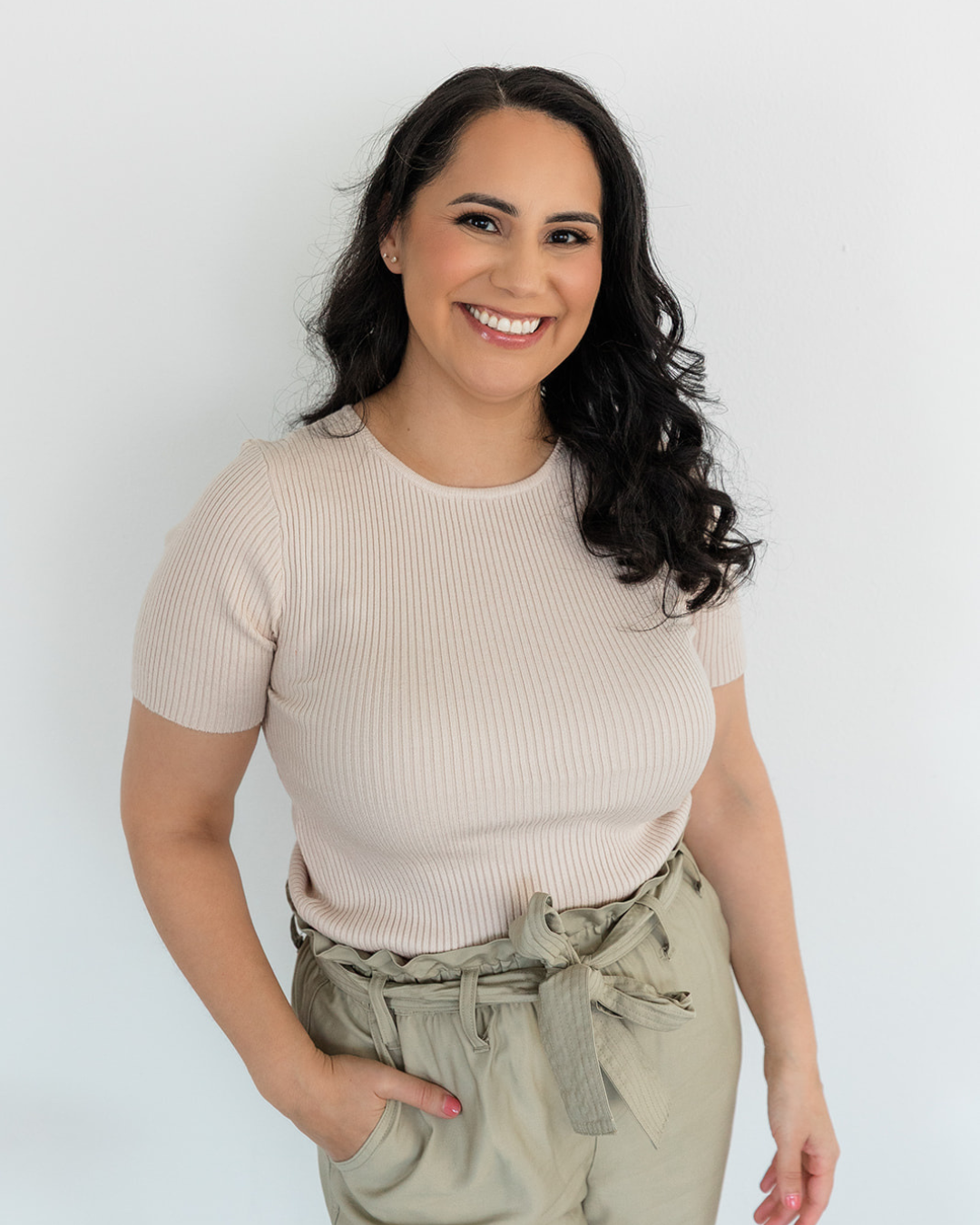
Hello! I'm Karla Hernández
LCSW perinatal and postpartum therapist serving women in Los Angeles and surrounding areas
I help new moms in Los Angeles navigate postpartum anxiety, depression, and the emotional shifts of motherhood. After experiencing my own struggles, I saw how much real support is missing for mothers. My practice is here to change that—offering trauma-informed, compassionate care that meets you exactly where you are. You don’t have to do this alone.