PPD vs PPA: What Is the Difference and How Do You Know Which One You Have
If you have been trying to figure out whether what you are experiencing is postpartum depression or postpartum anxiety, you are not alone and you are not overthinking it. PPD vs PPA is one of the most commonly searched questions in the postpartum space, and for good reason. These two conditions share symptoms, can exist at the same time, and receive wildly unequal amounts of attention in parenting culture. Depression gets most of the airtime. Anxiety is mentioned as an afterthought, if it is mentioned at all. So if your experience looks more like racing thoughts and relentless dread than sadness and disconnection, it is entirely possible you have been reading about the wrong condition for months.
The difference between PPD and PPA matters because they feel different in the body, they respond to slightly different treatment approaches, and understanding which one you are dealing with changes how you talk about it, how you seek support, and how quickly you begin to feel better. That said, you do not need to arrive at a therapist's office with a self-diagnosis already in hand. But having a clearer picture of what each condition actually looks like can help you stop second-guessing your experience and start taking it seriously, which is the most important first step.
This guide breaks down PPD vs PPA in plain language, maps the key differences between postpartum depression and postpartum anxiety, explains how the two conditions overlap, and gives you a clear next step no matter which side of that line you fall on or whether you are sitting right in the middle of both.
In case you are new here, I am Karla Michele Hernandez, a postpartum therapist supporting new moms through the full spectrum of postpartum mental health. At Alma de Madre, I work with moms experiencing postpartum depression, postpartum anxiety, birth trauma, and everything in between, because postpartum is rarely just one thing, and you deserve support that understands that.
What is postpartum depression: PPD?
Postpartum depression is not just sadness after having a baby. That description is so incomplete that it leaves out most of what the condition actually feels like for the majority of moms who experience it. PPD is a pervasive shift in how you experience yourself, your baby, and your life, and it operates on a level that goes well beneath mood.
Core symptoms of PPD beyond sadness
The emotional center of postpartum depression is often less about crying and more about emptiness. A persistent low mood that does not lift even during moments that should feel good. A flatness that makes joy feel unreachable, not because anything specific is wrong, but because the capacity for it seems to have gone somewhere you cannot access. You might look at your baby and feel nothing when you expected to feel everything, and the guilt that follows that moment can be one of the heaviest things you carry.
Disconnection is one of the most defining features of PPD. Disconnection from your baby, from your partner, from your sense of self, and from the life you are living. Things that used to matter stop mattering. Decisions that should be simple feel enormous. A brain fog settles in that makes concentration nearly impossible, and the gap between what you are able to do and what you feel you should be able to do becomes a constant source of shame.
PPD also lives in the body. Beyond the exhaustion that every new mom carries, there is a heaviness that sleep deprivation alone does not explain. Changes in appetite. A weight in the chest that feels like more than tiredness. And then there are the intrusive thoughts, which are one of the most distressing and least discussed symptoms of PPD. These are unwanted, disturbing mental images that arrive without warning and without invitation. They are not intentions. They are not reflections of who you are as a mother. They are a symptom, and they are treatable, but they are also one of the reasons so many moms suffer in silence, too afraid to say out loud what their brain is doing.
How PPD typically starts and how long it lasts
Postpartum depression most commonly begins within the first four weeks after birth, but it can emerge at any point in the first twelve months. Many moms experience what feels like a delayed crash, feeling relatively okay in the early weeks and then hitting a wall at three, four, or six months when the fog of newborn survival lifts and the emotional weight becomes impossible to keep carrying quietly.
With treatment, most women see meaningful improvement within three to six months. Without treatment, PPD can persist for one to three years and in some cases becomes a longer depressive episode that is no longer tied to the postpartum period at all. Time alone does not resolve PPD. Support, professional care, and consistent attention to recovery do.
What is postpartum anxiety: PPA?
Postpartum anxiety is the condition that most moms with PPA never knew they had, because it was never in any of the materials they were given. While PPD gets most of the cultural attention, PPA is just as common and in many ways more difficult to recognize because it can look, from the outside, like being a very attentive and conscientious mother. The internal experience is a completely different story.
Core symptoms of PPA
The center of postpartum anxiety is a nervous system that will not settle. Racing thoughts that arrive the moment you try to rest and will not slow down regardless of how exhausted you are. A relentless stream of worst-case-scenario thinking about your baby, your capacity as a mother, your relationship, your health, everything, that runs on a loop you cannot find the off switch for. You check the baby's breathing not once but four times. You know, rationally, that everything is fine. Your nervous system does not care about rational.
Physically, PPA lives in the chest and the throat and the stomach. A tightness that shows up without warning. A heart that races when nothing is happening. Shortness of breath. A low-level hum of dread that follows you through the day regardless of what is actually occurring. This is not worry in the ordinary sense. This is a body that has been switched into survival mode and cannot find its way back to baseline.
Postpartum anxiety also shows up as irritability, being easily overwhelmed by noise or touch or multiple demands arriving at once, difficulty being alone with the baby because the anxiety spikes without another adult present, and avoidance behaviors that gradually narrow the world down to what feels manageable and safe. You cancel plans. You stay close to home. You choose the predictable over the good because the unpredictable feels like too much. And underneath all of it is a persistent sense that something terrible is about to happen, even when everything around you is objectively fine.
How long does postpartum anxiety last?
Postpartum anxiety follows a similar pattern to PPD when it comes to treatment and duration. With professional support, most moms experience significant improvement within a few months. Without treatment, PPA can persist well beyond the first year and in some cases develops into generalized anxiety disorder that outlasts the postpartum period entirely.
One pattern that is particularly common with PPA and worth naming directly is high-functioning anxiety. Many moms with postpartum anxiety continue to function at a high level externally, managing the baby, managing the household, managing everyone else's needs, while carrying an internal load that is completely unsustainable. The external competence masks the internal struggle, which means the anxiety goes unrecognized and untreated for far longer than it should. If you have been functioning fine on the outside while feeling like you are falling apart on the inside, that is not a contradiction. That is PPA doing exactly what it does.
PPD vs PPA: the key differences side by side
The clearest way to understand the difference between postpartum depression and postpartum anxiety is to look at how each condition shows up across the dimensions that matter most to lived experience. This is not a diagnostic tool. It is a map to help you recognize your own experience more clearly.
| PPD | PPA | |
|---|---|---|
| Core emotional experience | Emptiness, numbness, disconnection | Dread, worry, hypervigilance |
| Primary thought pattern | I am failing, I am a bad mother, nothing matters | Something terrible is going to happen, I cannot stop thinking |
| Physical experience | Heaviness, fatigue, crying or inability to cry | Racing heart, chest tightness, inability to rest |
| Relationship to baby | Disconnection, difficulty bonding | Hypervigilance around baby's safety and wellbeing |
| Sleep pattern | Cannot sleep or sleeps too much, exhaustion beyond deprivation | Cannot sleep even when exhausted, brain will not stop |
| Onset | Often within first four weeks, can emerge up to twelve months | Often within first few weeks, can emerge gradually |
| Response to support | Responds well to therapy, medication, and social connection | Responds well to therapy, nervous system regulation, and somatic approaches |
These are general patterns and real experiences often blur the lines between them. If you are reading this table and finding yourself in both columns, that is not confusion. That is important information, and it brings us to the next section.

Can you have postpartum depression and anxiety at the same time?
Yes, and more moms experience both simultaneously than most people realize. Research suggests that approximately 50% of moms with PPD also meet criteria for postpartum anxiety, and the reverse is also true. Having both is not a sign that something is more wrong with you. It is a common clinical presentation that has its own treatment path, and it is one of the main reasons self-diagnosis is so difficult and so often incomplete.
If you have been reading through this post nodding at sections from both conditions, that is not you being unable to identify your own experience. That is your experience being accurately reflected. The overlap is real. The emotional flatness of depression combined with the relentless activation of anxiety produces something that is harder to describe than either condition alone. Exhausted but wired. Empty but terrified. Disconnected from your baby and simultaneously unable to stop worrying about them. Both things at once, in a body that is already running on nothing.
When both conditions are present, treatment needs to address both simultaneously rather than sequentially. A postpartum specialist who understands the intersection of PPD and PPA is significantly more equipped to navigate this than a general therapist who may focus on one dimension while inadvertently reinforcing the other. You do not have to figure out which one is the primary problem before reaching out. That is what the first conversation is for.
How PPD and PPA are treated?
Treatment for postpartum depression and postpartum anxiety follows different but overlapping paths, and understanding the basics can help you walk into a first session with more clarity about what to expect. If you want to understand what this process looks like in practice, you can explore what perinatal and postpartum therapy at Alma de Madre actually involves before you ever book a session.
For PPD, Cognitive Behavioral Therapy and Interpersonal Therapy are the most evidence-based approaches, with strong research support for both. Medication, particularly SSRIs, is effective for moderate to severe PPD and produces faster recovery when combined with therapy rather than used alone. For PPA, therapy focuses specifically on the anxiety and worry patterns driving the nervous system response, with somatic approaches playing a particularly important role in addressing the physical experience of anxiety in the body. Nervous system regulation techniques give moms tools they can use between sessions, in the moments when the spiral starts and the next appointment is days away.
When both conditions are present, a skilled postpartum specialist moves between the depressive and anxious dimensions of treatment as needed, recognizing which is driving symptoms at any given point and adjusting accordingly. Online therapy is fully effective for both PPD and PPA and removes the logistical barriers that make consistent in-person care genuinely difficult for moms with newborns. Your ability to access good care should not depend on being able to get yourself out of the house on a hard day.
You do not have to figure out which one you have before reaching out
Whether what you are experiencing looks more like PPD, more like PPA, or like an exhausting combination of both, the most important thing is not getting the label right before you ask for help. The most important thing is deciding that what you are carrying is real, that it has a name, and that you deserve support in moving through it. You have been trying to figure this out alone long enough, and the fact that you are still here, reading, looking for answers, is proof that you have not given up on yourself even when everything has felt impossibly hard.
At Alma de Madre, I work with moms experiencing the full spectrum of postpartum mental health, from postpartum depression and postpartum anxiety to birth trauma, pregnancy loss, and postpartum rage. You do not need to arrive with a diagnosis or a clean description of what is wrong. We start with a real conversation, and we figure out the rest from there.
If you are looking for therapy in Whittier, CA, or therapy in Los Angeles, I work with moms across the greater Los Angeles area, including Whittier, East Los Angeles, Downey, Norwalk, La Mirada, Montebello, and communities throughout Southern California. Online sessions are available for moms anywhere in California.
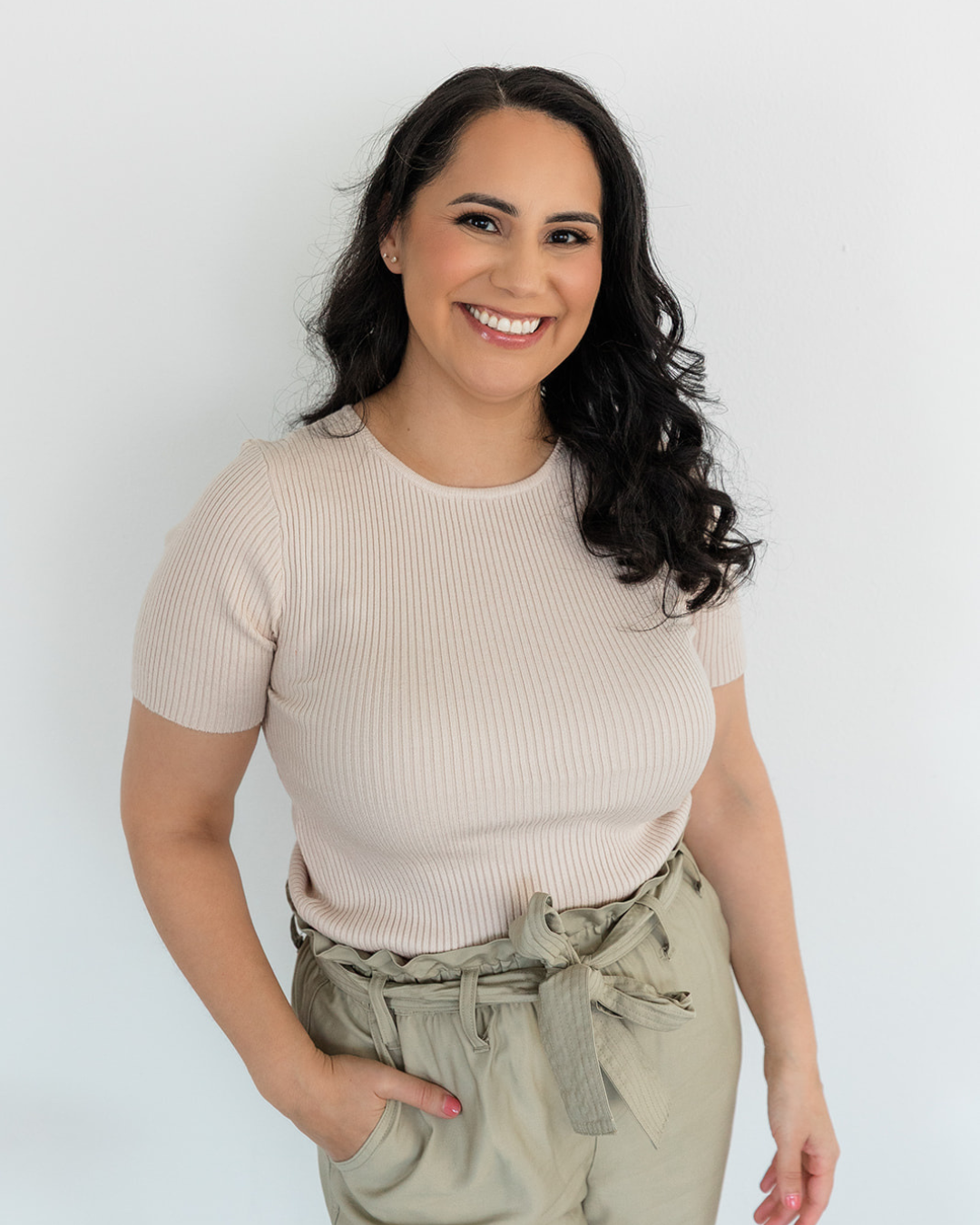
Hello! I'm Karla Hernández
LCSW perinatal and postpartum therapist serving women in Los Angeles and surrounding areas
I help new moms in Los Angeles navigate postpartum anxiety, depression, and the emotional shifts of motherhood. After experiencing my own struggles, I saw how much real support is missing for mothers. My practice is here to change that—offering trauma-informed, compassionate care that meets you exactly where you are. You don’t have to do this alone.