Postpartum blues vs postpartum depression: what a partner or family member should watch for
Up to eight in ten new mothers cry more than usual, feel raw, and snap at the people they love most in the first two weeks after birth, and most of the time none of it is postpartum depression. The confusing part about postpartum blues vs postpartum depression is that almost no one explains the difference to the people standing closest to a new mother: her partner, her mother, her sister, the friend who shows up with a casserole and stays to do the dishes. If you are reading this, someone you love just had a baby, and something about how she is doing does not sit right with you, even if you cannot name exactly what.
That instinct is worth trusting. This guide breaks down what postpartum blues actually look like, what separates them from postpartum depression, and specifically what you, as the person watching from the outside, are likely to notice long before she says a word about it herself.
In case you are new here, I am Karla Hernández, LCSW, founder of Alma de Madre and a postpartum depression therapy provider for new mothers, especially Latina and BIPOC mothers, working through the rawest parts of postpartum. I lived through my own postpartum depression after a birth that looked fine on paper, and I have spent the years since helping partners and family members figure out what they are actually watching happen when a new mother in their life goes quiet.
Postpartum blues vs postpartum depression at a glance
Before we go section by section, here is the shape of these two experiences side by side. Use it as a quick reference, then keep reading for what each row actually looks like in daily life, especially from where you are standing.
When it starts: Postpartum blues usually show up within the first two to three days after birth. Postpartum depression can begin during pregnancy or anytime in the first year after birth.
How long it lasts: Postpartum blues fade on their own within about two weeks. Postpartum depression persists for weeks or months without treatment.
How it feels: Postpartum blues bring mood swings, crying spells, and feeling overwhelmed, with real moments of joy mixed in. Postpartum depression brings persistent sadness, numbness, or guilt that does not lift, even during good moments.
What helps: Postpartum blues respond to rest, practical support, and time. Postpartum depression usually needs professional support such as therapy, and sometimes medication.
What do postpartum blues feel like?
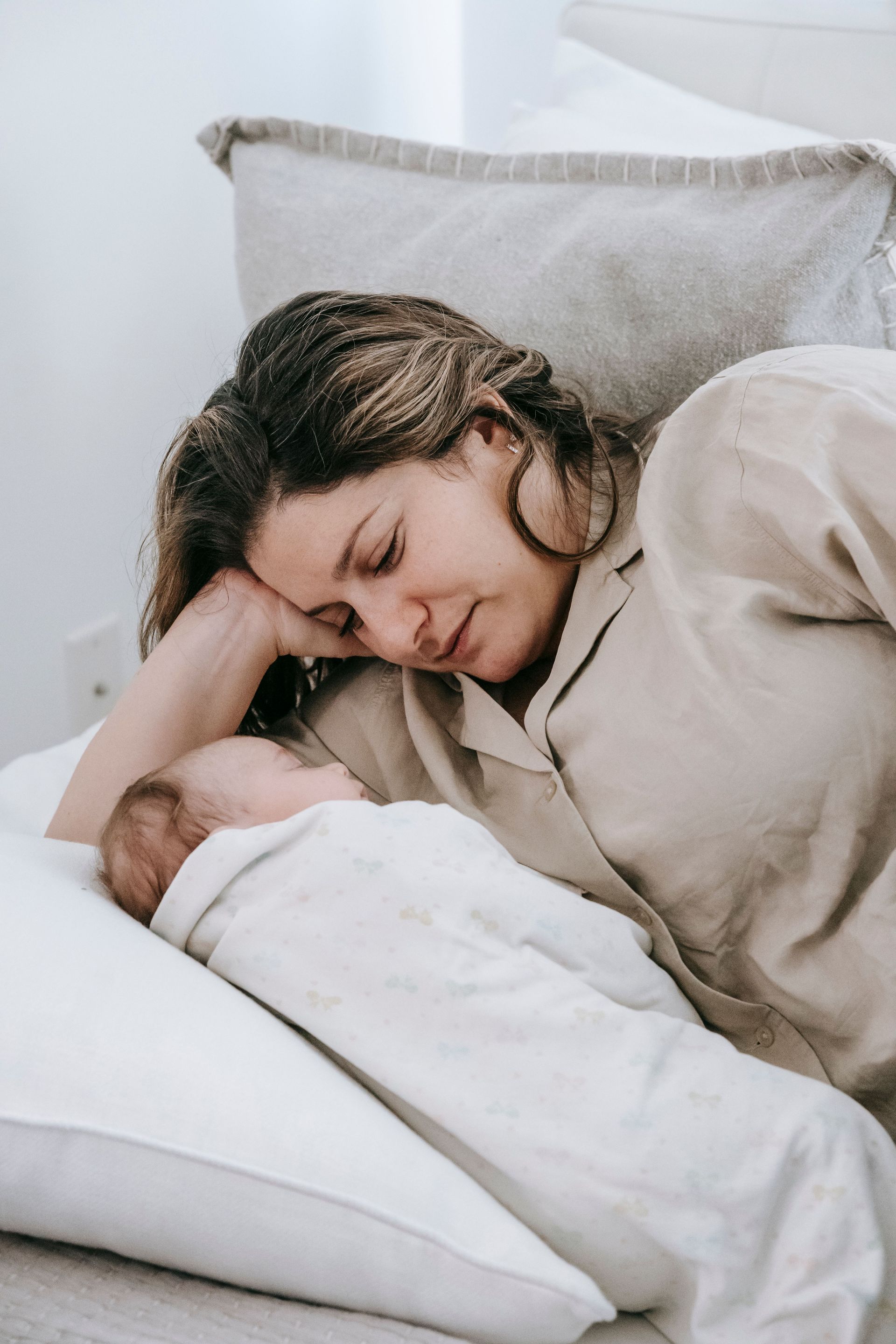
Postpartum blues, often called the baby blues, show up in the first few days after birth and touch the vast majority of new mothers in some form. If you are watching someone you love go through this, expect mood swings that seem to arrive out of nowhere: tears during a diaper change, sudden irritability over something small, a wave of overwhelm that passes as quickly as it came. She might laugh at something funny one hour and cry over nothing the next, and both reactions can be genuine.
What makes postpartum blues different from something more serious is that joy is still reachable underneath the exhaustion. She can still hold her baby and feel that rush of love, even while crying about how tired she is. She can still laugh with you, even if the laugh comes right after tears. That mix, sadness and real moments of connection existing side by side, is one of the clearest signs that what you are seeing is the blues rather than depression.
You might also notice she seems easily rattled by things that would not normally bother her: a crying baby who will not settle, an unexpected visitor, a schedule that fell apart. This heightened sensitivity is common and it is temporary. It comes from a body adjusting to a massive hormonal shift on almost no sleep, not from anything being fundamentally wrong.
Why nights feel harder
Postpartum blues symptoms tend to intensify after dark, and if you have noticed she seems to unravel more in the evening than during the day, you are not imagining it. Hormone levels that support mood during daylight hours drop further at night, and exhaustion from a full day of feeding and soothing has nowhere left to hide once the house goes quiet. Nighttime also strips away distraction. During the day there are visitors, errands, and small tasks to move through. At night it is just her, the baby, and whatever feelings she has been holding off since morning. If you are the partner on the receiving end of a two in the morning breakdown that seemed to come from nowhere, know that the timing itself is a normal part of the blues, not a sign that something has suddenly gotten worse.
How long do postpartum blues last, and what helps in the meantime?
Postpartum blues typically peak around days three to five after birth and fade on their own within about two weeks, without any specific treatment. That timeline matters more than almost anything else in this guide, because duration is often the clearest way to tell the difference between blues and depression from the outside. If two weeks pass and she still seems to be crying daily, still seems flattened rather than just tired, that is the point where the blues should be loosening their grip and are not.
In the meantime, what actually helps is unglamorous and practical. Sleep, even in short stretches, matters more than almost anything else. So does someone else taking a task off her plate without being asked, a meal that shows up already made, a load of laundry that gets folded before she has to think about it. Reassurance helps too, specifically the kind that does not try to fix her feelings but simply sits with them: telling her that what she is feeling makes sense, that it will not always feel this hard, and that you are not going anywhere.
What does not help is telling her to look on the bright side or reminding her how much she wanted this baby. Both are usually true, and neither one touches what she is actually feeling in the moment.
Holding your baby: why closeness still matters
You may have heard that holding your baby skin to skin helps with the blues, and there is real truth in that, both for her and for you. Physical closeness with a newborn supports the release of oxytocin, a hormone that can ease some of the sharper edges of postpartum mood swings. But do not mistake this for a cure, and do not use it as evidence that everything is fine simply because she is doing it. A mother can hold her baby constantly, love that baby fiercely, and still be struggling underneath. Closeness helps regulate mood in the moment. It does not replace sleep, support, or, if two weeks have passed and nothing has lifted, professional care.

What does postpartum depression feel like once it goes beyond the blues?
Postpartum depression does not always look like sadness, and that surprises a lot of families who are watching for tears and instead see something closer to nothing at all. Where the blues bring mood swings with real highs mixed in, depression tends to flatten everything. She might describe feeling numb rather than sad, disconnected from her own life rather than overwhelmed by it. Guilt often becomes a constant undercurrent, not guilt about one specific thing but a general sense that she is failing, even when there is no evidence of that anywhere.
Bonding with the baby can be affected in ways that are hard for her to admit out loud. She might go through every motion of caregiving, feeding, changing, soothing, while feeling strangely far away from the experience, almost like she is watching herself do it rather than living it. This is one of the most painful parts of postpartum depression to sit with as a partner, because it can look like she does not want to be there, when the truth is that she cannot feel her way into being present even though she is trying.
Sleep and appetite changes that go beyond what a newborn's schedule would explain are another marker. So is a loss of interest in things that used to matter to her: a favorite show, a friend she used to talk to every day, her own appearance. None of this is a character flaw or a sign she loves her baby any less. It is what depression does. It takes the color out of things that used to have color, whether or not anything on the outside has changed. The clearest marker separating this from the blues is time. If two weeks after birth she still cannot access joy, even in small doses, that duration alone is worth taking seriously. If you want a fuller picture of what recovery actually looks like once depression is confirmed, I break down realistic timelines in how long postpartum depression really lasts.
What are the signs of emotional distress after birth that a partner or family member might notice first?
Because postpartum depression often hides behind competence rather than obvious collapse, the people around a new mother frequently notice something is wrong before she says it herself, sometimes long before. Watch for a mother who has stopped asking for help entirely, even the small kind she used to ask for without thinking twice. Watch for someone who has gone quiet instead of tearful, who answers every check in with "I'm fine" in a tone that does not match her face. Watch for a woman who is doing everything right on paper, feeding on schedule, keeping the house together, showing up to appointments, while seeming to disappear a little more each week behind all of it.
Other signals worth paying attention to include a sudden drop in how often she talks about the baby with any warmth, pulling away from family gatherings she used to enjoy, or a kind of forced cheerfulness that feels performed rather than felt, especially around people she does not fully trust yet. Irritability that seems disproportionate to whatever triggered it can also be a sign, since anger and rage are common but underdiscussed faces of postpartum depression. Some of what you are noticing might also point toward postpartum anxiety rather than depression, especially if racing worry stands out more than flatness. My guide on postpartum anxiety symptoms walks through how that version tends to show up differently.
If you notice several of these signs together, especially the withdrawal and the flattened warmth, trust that observation even if she insists everything is fine. She may genuinely believe that, or she may be protecting you from worry. Either way, your read on the situation matters.
What "aguantar" can hide
In many Latina and BIPOC families, there is a cultural script that runs underneath all of this: the instinct to aguantar, to endure quietly rather than complain, to prove strength by never naming pain out loud. I grew up with this script myself, and I see it constantly in the mothers I work with. A woman raised to believe that a good mother, a good daughter, a good wife simply pushes through will often present as remarkably composed on the outside while unraveling privately, precisely because falling apart visibly was never modeled as an option.
This is exactly why partners and family members often catch what a mother herself will minimize or hide. If she comes from a family where struggling out loud was treated as weakness or ingratitude, she may answer every direct question about how she is doing with a version of "fine," even when fine is nowhere close to true. Watching for what she does rather than only listening to what she says becomes essential here: the meals she stops eating, the calls she stops returning, the silence where there used to be conversation. Aguantar can look like strength from the outside. From where I sit, it is often the loudest sign that someone needs support and does not yet feel safe enough to ask for it directly.
When does postpartum depression need more than rest, and what actually helps?
Postpartum blues resolve with rest, support, and time. Postpartum depression does not work the same way, and waiting for it to pass on its own usually means waiting through months that did not need to be endured. If two weeks have passed since birth and the sadness, numbness, or disconnection has not lifted, or if it is getting heavier rather than lighter, that is the point to bring in professional support rather than more patience.
Therapy is the most direct path forward, and it works. Through perinatal and postpartum therapy, a mother does not have to explain herself from scratch or convince anyone that what she is feeling is real. The work is about naming what is actually happening, separating it from guilt and comparison, and building back a sense of herself that motherhood does not have to erase. For some mothers, a conversation with a doctor about medication is also part of the picture, and that is a medical decision worth exploring rather than avoiding out of fear of what it might mean about her as a mother.
If you are the partner or family member reading this, one of the most useful things you can do is make the first call or send the first message yourself, or sit next to her while she does it. The hardest part of getting help is often the first step, not the process itself. Offering to handle logistics, finding a provider, checking insurance, driving her to the first appointment, can matter more than any reassurance you could say out loud. If you are not sure what to look for in a provider, my guide on how to find the right postpartum depression therapist walks through exactly that.
And if what you are noticing includes confusion, hallucinations, or any thoughts of harming herself or the baby, that is not a moment to wait for a scheduled appointment. Call or text 988 for the Suicide and Crisis Lifeline immediately. That level of symptom is a medical emergency, not a sign of failure, and fast action protects both her and the baby.
You don't have to navigate postpartum blues vs postpartum depression alone
Watching someone you love struggle after birth, and not being entirely sure whether what you are seeing is normal or something more, is its own kind of exhausting. You do not have to carry that uncertainty by yourself, and neither does she. Postpartum blues vs postpartum depression is not always obvious from the outside, and getting it wrong in either direction, dismissing something real or overreacting to something temporary, is an understandable fear. You are allowed to ask for help figuring out which one you are looking at.
I help new mothers and the people who love them make sense of what is actually happening in the fog of early postpartum. Through perinatal and postpartum therapy, I work through the blues, the depression, the anxiety, and everything in between with you, always with attention to the cultural weight so many Latina and BIPOC mothers carry into this season. You do not need a diagnosis in hand before reaching out. You just need the sense that something is worth talking through.
I work with mothers and families across postpartum therapy in Whittier and support across Los Angeles, with virtual sessions available throughout California for anyone who cannot easily leave the house right now. Wherever you are in this, in the room with her or trying to help from a distance, there is a next step that does not require either of you to have all the answers yet.

Hello! I'm Karla Hernández
LCSW perinatal and postpartum therapist serving women in Los Angeles and surrounding areas
I help new moms in Los Angeles navigate postpartum anxiety, depression, and the emotional shifts of motherhood. After experiencing my own struggles, I saw how much real support is missing for mothers. My practice is here to change that—offering trauma-informed, compassionate care that meets you exactly where you are. You don’t have to do this alone.